PROJECT OVERVIEW
Tenka is a conceptual Japanese stationery ecommerce platform designed to bring a curated, elevated shopping experience to American audiences. The project explores how intentional product curation and modern interface design can differentiate a brand in a market saturated with dated websites and mass-imported goods trading on 'Japanese' as a selling point alone.
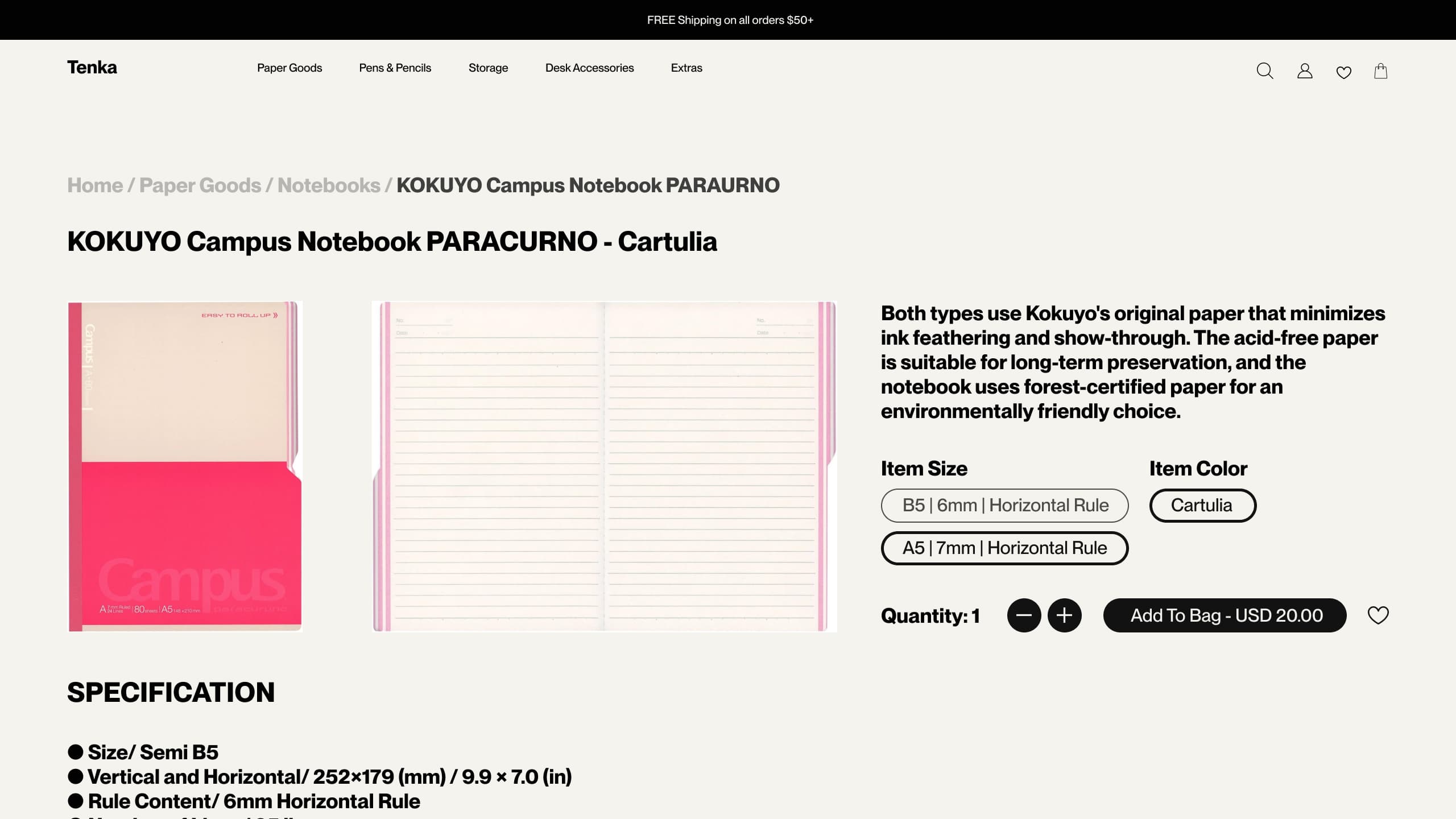
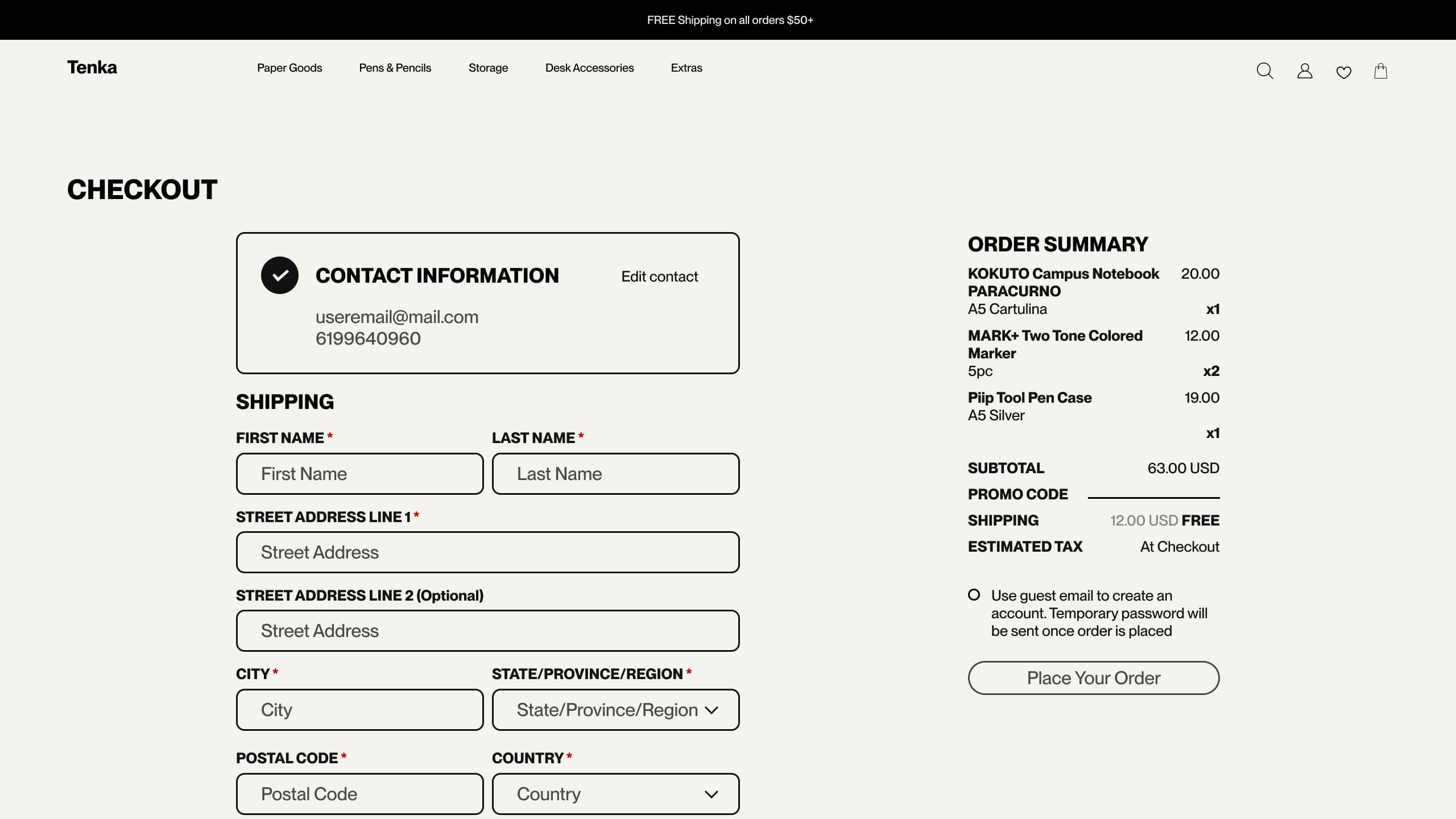
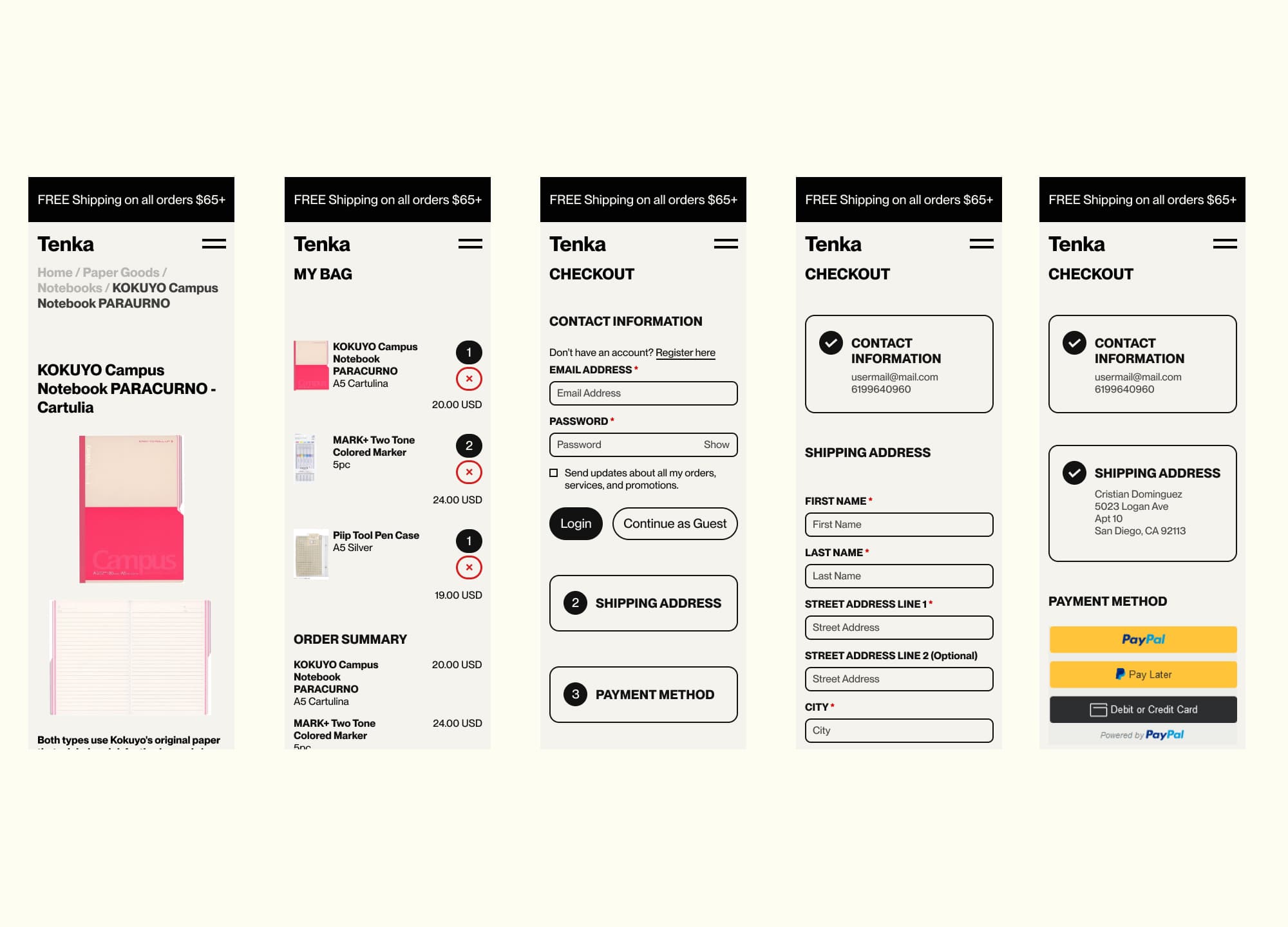
I designed a responsive ecommerce platform that includes traditional and quick checkout flows, guest purchasing options, account incentives, and community-driven content like weekly highlights and staff curations; addressing conversion friction points I observed across fashion and stationery retail while building a brand that feels refined and intentional rather than transactional.
RESEARCH AND DISCOVERY
COMPETITIVE ANALYSIS
I began by examining established stationery retailers like JetPens, Kokuyo, and local San Diego stationery shops to understand the current landscape. A pattern emerged: most sites were either visually outdated with cluttered layouts and small product imagery, or felt like undifferentiated import catalogs where 'Japanese stationery' was expected to carry the brand without curation or context.
I expanded my research beyond stationery into fashion and footwear ecommerce, studying how brands used large-format imagery to showcase single items with elegance and clarity. These industries had mastered the balance between editorial presentation and functional commerce.
CONVERSION PATTERN RESEARCH
I studied quick-add and express checkout patterns across fashion and shoe retailers to understand how reducing friction impacts conversion. Many sites offered both traditional cart flows and streamlined quick-buy options, catering to different user mindsets: browsers who wanted to explore versus decisive buyers ready to purchase immediately.
I also researched account creation friction, noting how forced registration often leads to cart abandonment. The challenge was designing a system that allowed seamless guest checkout while incentivizing account creation through tangible benefits like early access to sales or exclusive product drops.
DESIGN PROCESS
VISUAL DIRECTION
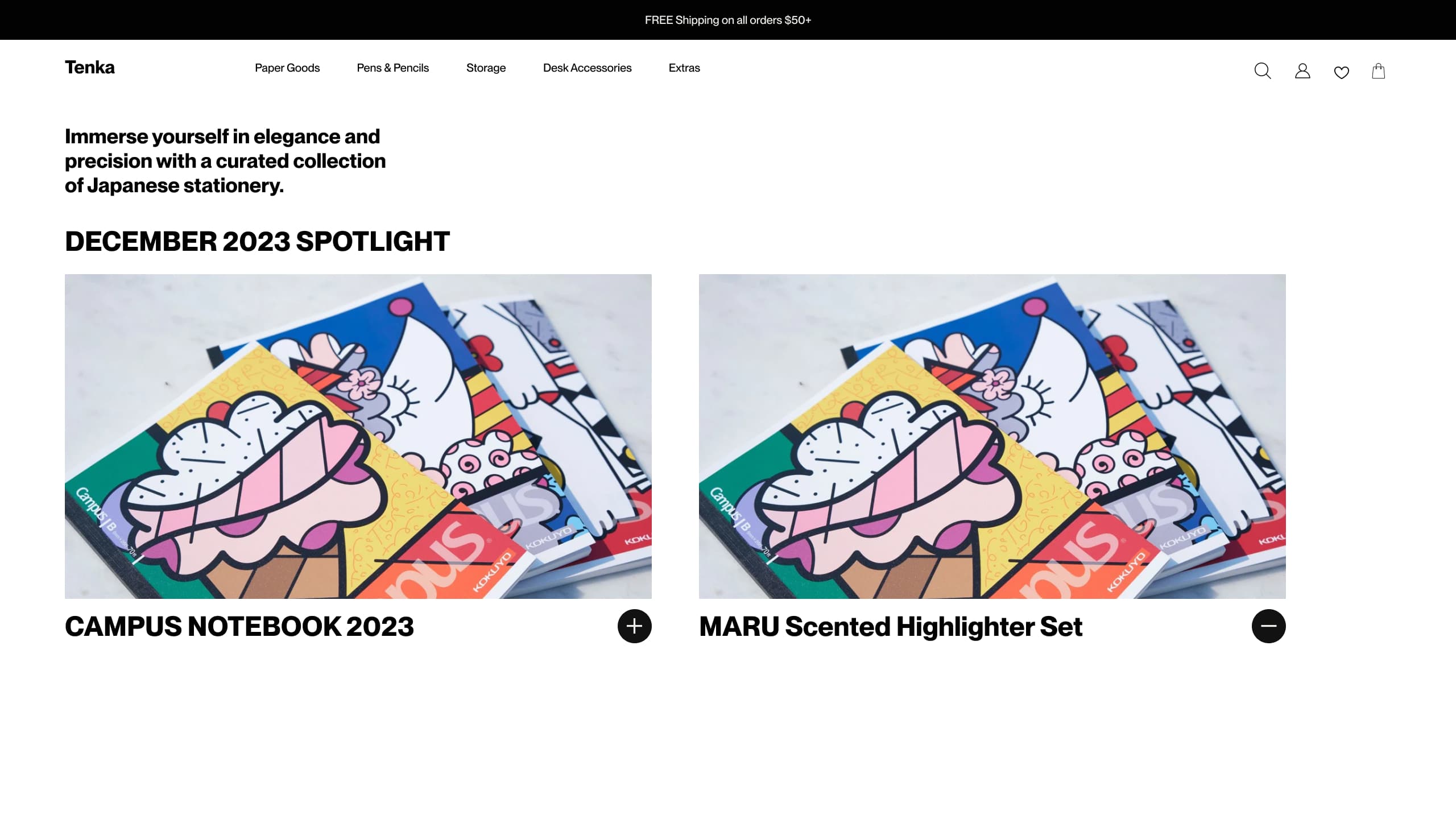
I built the visual identity around restraint and elegance, using off-white and black as the foundational palette with large-format product photography doing the heavy lifting. The design prioritizes generous whitespace and clean sans-serif typography to create a uniform, refined aesthetic that doesn't compete with the products being showcased.
Navigation and UI elements rely on simple rounded shapes and minimal ornamentation, allowing the imagery and content to remain the focus. The approach was inspired by Japanese design principles: clarity, intention, and respect for negative space.
COMMERCE FEATURES
I designed dual checkout pathways: a traditional multi-step cart flow for users who wanted to browse and build orders, and a quick-buy option for decisive purchasers. The quick-buy flow consolidates product selection, contact information, shipping, and payment into a streamlined experience with minimal navigation.
Guest checkout was prioritized to reduce abandonment, but account creation was incentivized through strategic messaging: early access to sales, free shipping thresholds, and exclusive product bundles. The system respects user autonomy while presenting clear value for deeper engagement.
REFLECTION
This project taught me how to balance aesthetic refinement with the functional demands of ecommerce, particularly around conversion optimization and user trust. While I designed comprehensive flows for guest checkout and quick-buy patterns, I recognize there are behavioral nuances I didn't validate, like whether users actually trust minimal checkout interfaces or prefer more traditional multi-step reassurance, especially for first-time purchases from an unknown brand.
If I were to iterate, I'd conduct usability testing with stationery enthusiasts to validate whether the curated, editorial approach resonates with the target audience or if they prefer broader selection and filtering typical of established retailers. I'd also explore how the incentive structure for account creation performs against actual user behavior: do people value early access and exclusivity, or do friction-reducing features like saved addresses matter more?